The camera moves, or the product does
A product film gets its motion from one of two places: the camera, or the product itself. Which one is available is decided by the thing you sell, not by taste — a pendant cannot tumble and popcorn cannot hold still. Choosing the wrong source, or both at once, is what makes a shot read as unsteady rather than alive.
Published · updated — written and checked by hand.
Ask what a product video should do and the answers come back as adjectives — cinematic, premium, clean. Adjectives are not decisions. The first real decision in a ten-second product film is narrower than any of them, and more useful: what, exactly, is going to move?
There are only two candidates. The camera can move around a product that stays put, or the product can move while the camera holds. Almost every product film you have ever liked picked one of those and committed to it.
Two sources, and usually only one is available
This reads like a stylistic choice. It is not. It is a fact about the object.
A gold pendant on a chain does not do anything. Left alone, it hangs. Anything rigid and inert — jewellery, a watch, a ceramic mug, a sealed bottle of serum, a hand tool — has no behaviour of its own to film. Point a camera at it and wait, and you will wait.
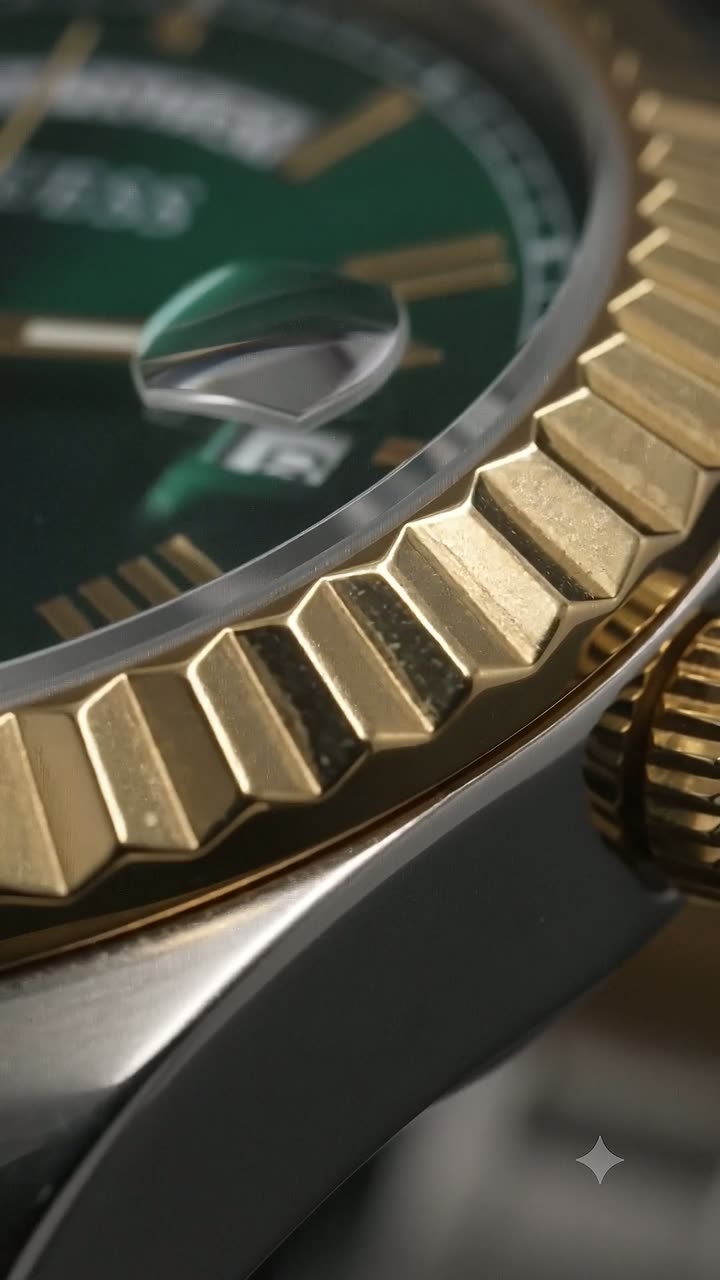
So the motion has to come from the camera. The watch above never moves; the focus travels across it, from the fluted bezel to the green dial to the cyclops lens over the date. That is ten seconds of a completely stationary object, and it is not a still, because the looking is what moves.
Other products are the opposite. They have behaviour, and the behaviour is the product.
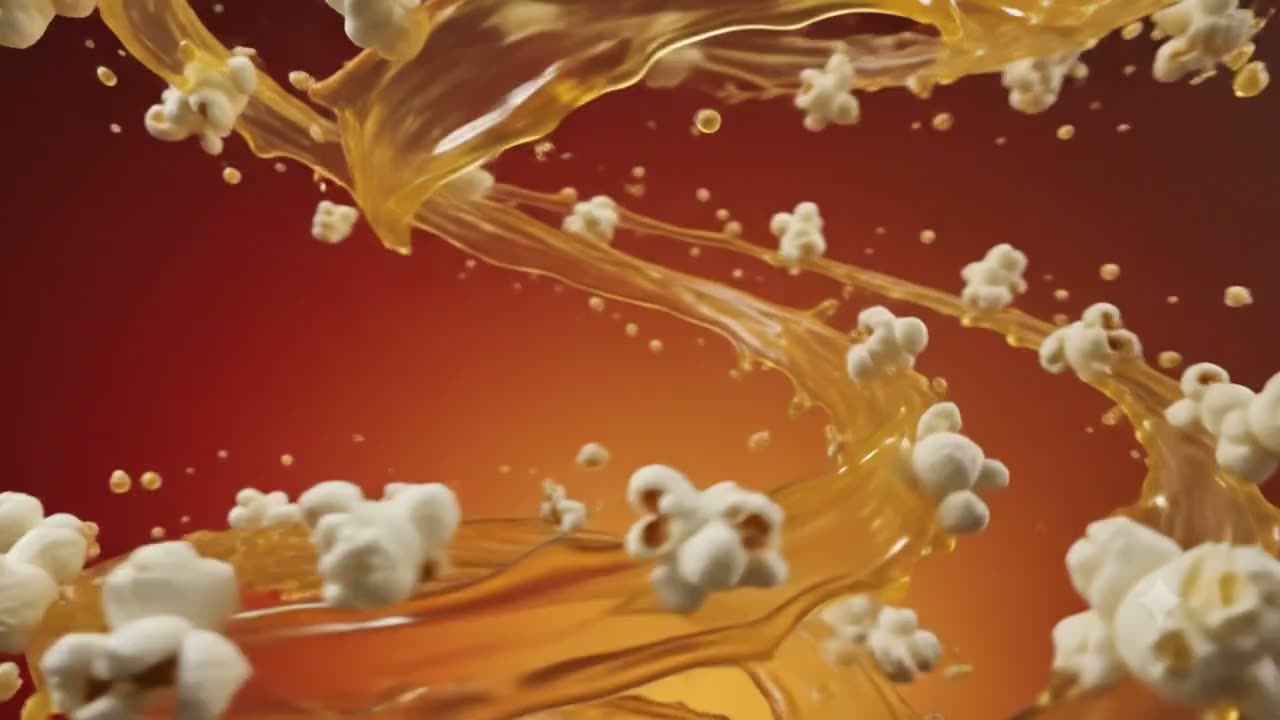
Caramel popcorn tumbles. That is what it does in the bag, in the bowl and in the hand, and a film of it tumbling through hot caramel is not a flourish — it is the most direct statement available about what is being sold. Holding the camera still and letting the thing perform is the honest shot here.
Why both at once fails
The temptation, given two sources of motion, is to use both. It is the one combination that reliably reads worse than either alone.
Motion in a frame is only legible against something that is not moving. When the camera orbits a static product, the product is the anchor and you read its shape. When a still camera watches a product move, the frame is the anchor and you read the behaviour. Move both and there is no anchor left: a viewer cannot tell whether the product turned or the camera went around it, and the shot stops being about the product and starts being about the instability.
This is also why it survives review. A frame grabbed out of a doubly-moving shot looks fine — the problem only exists in time. It passes as a thumbnail and fails on the listing, which is the worst order to find out in.
The test, before you generate anything
One question settles which source you have, and it is not about video at all. Ask what your product does when a customer picks it up.
- If the honest answer is “nothing, it just sits there”, you have a camera-motion product. Rigid, solid, inert: jewellery, watches, hardware, ceramics, sealed bottles, framed prints.
- If the answer names a behaviour — it pours, it tumbles, it drapes, it foams, it stretches — you have a subject-motion product, and that behaviour is your strongest ten seconds.
- If the answer is “both”, take the behaviour. A camera move is available to every product on earth; the behaviour is available to yours, and it is the part a rival's stock studio shot cannot copy.
A note on length, from the files themselves
One measured detail in this set is worth pointing at, with the caveat that five clips is an observation and not a law.
Four of the five films on this site run ten seconds. The exception is the popcorn, at eight. It is also the only one whose motion belongs to the product rather than the camera.
The reason is available from first principles rather than on faith. A camera move can be any length you like — travel further, move slower, add a beat — because you are choosing the pace. A physical event cannot. Popcorn tumbling through caramel takes as long as it takes, and when it has landed, it has landed. Stretching it means slowing it, which looks wrong, or repeating it, which looks like a mistake.
So a subject-motion film has a natural length that comes from the event, and a camera-motion film has whatever length you decide to spend. If your product performs, expect the film to run as long as the performance and not longer. That is a feature. A film that stops when the thing has finished is the one that does not feel padded.
Where the choice actually gets made
You do not direct the camera, and you do not choreograph the product — a fresh take decides both. What you control is the reference photo, and the reference is where this choice is really made, earlier than it looks.
A flat, square-on packshot of a rigid product gives a take everything it needs to move a camera across it: a push in, a glide over the surface, focus travelling from one detail to the next. Going round it takes more than one photo, because a take will not turn onto a side none of your photos show — if you want the orbit, upload the back and a side as well. A photograph of something mid-behaviour — the pour already happening, the fabric already falling — tells a take that the behaviour is the subject. Upload the static shot of a product that performs and you have quietly asked for the wrong film, then wondered why the takes feel inert.
The short version
Two things can move in a product film and only one of them should. Rigid products have no behaviour, so the camera does the work and the film is about form. Products that pour, tumble or drape have behaviour worth more than any camera move, so the frame holds still and the film is about what the thing does. Moving both leaves a viewer nothing to measure the motion against. Decide which kind of product you sell before you upload the photo, because the photo is where you tell the film which one it is.
Read enough? Watch your own product.
One photo in — a cinematic 10-second video and a full set of marketing photos out. Your first one is free.